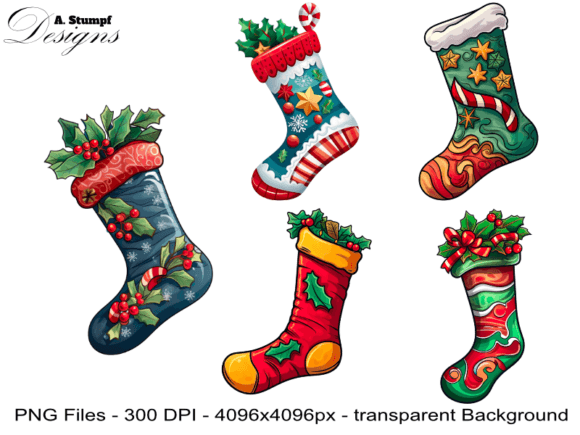
Christmas Sock Clip Art: A Designer's Review for Holiday Embroidery
As we approach the peak season for holiday crafting, my design table is usually buried under swatches of fleece, rolls of stabilizer, and a stack of digital files waiting to be tested. This week, I've been evaluating Christmas Sock Clip Art to see if it holds up not just as a pretty picture on a screen, but as a functional machine embroidery design for real-world products. For those of us running small shops or selling on Etsy, the difference between a file that looks good and a file that stitches well can make or break a product line.
My first impression of this Illustrations set was its charming, whimsical mood. The shapes are classic without feeling dated, capturing that cozy, nostalgic feeling we all want in our holiday decor. However, looking at it through the lens of an embroiderer, I immediately started analyzing the line weights and potential stitch paths. A design like this naturally belongs on items that celebrate comfort and tradition. It feels right at home on a rustic kitchen towel or a soft baby blanket, but the real test is how it translates from vector lines to actual thread.
Real-World Application: The Custom Tote Bag Test
To give this a proper stress test, I imagined a specific client scenario: a local boutique owner needing a run of limited-edition tote bag design options for their December pop-up shop. They wanted something festive but not overly childish, suitable for carrying gifts or groceries. I visualized placing the Christmas Sock Clip Art on a heavy canvas tote. The bold outlines of the sock shape suggest it would handle the texture of canvas well, provided the stitch density isn't too aggressive.
In this context, the design shines as a focal point. If you are creating a handmade product like this, the visual appeal relies heavily on contrast. I'd recommend using bright reds and greens against a natural or cream-colored fabric to maximize the impact. For a sweatshirt embroidery project, the same logic applies; the design needs breathing room. Crowding it with other elements might dilute its charm. As a standalone motif on the left chest of a hoodie or centered on a pillow cover, it offers a professional finish that customers associate with high-quality custom apparel.
Navigating Fabric Challenges and Hoop Limitations
While the aesthetic is strong, there are technical considerations every Etsy seller and maker needs to address before launching a product. One major factor is the hoop size. Depending on the specific version of the file you download, these illustrations can vary in scale. If you are working with a small 4x4 hoop, you might need to resize the design significantly. This is where caution is required. Shrinking a detailed illustration too much can cause satin stitch columns to merge or tiny running stitch details to disappear entirely.
Fabric choice is equally critical. If you plan to use this on stretchy materials like jersey knits for baby embroidery, your stabilizer game needs to be on point. A cut-away stabilizer is non-negotiable here to prevent puckering, which would ruin the clean lines of the sock shape. Similarly, if you are attempting this on dark fabrics, you must check the thread colors included in the embroidery file. Does the design include an underlay that covers the background fabric effectively? Without testing, you risk the dark material showing through light thread areas, making the final product look amateurish.
Curved surfaces present another hurdle. Applying this to a cap or a structured hat requires careful hooping and potentially a foam topper if the design has large fill areas. The "toe" and "heel" curves of the sock design need to remain crisp; if the machine pulls too hard on these corners, the shape distorts. I always advise running a test stitch-out on a scrap piece of the exact same fabric you intend to sell. This simple step saves money on ruined inventory and builds customer trust.
Enhancing Brand Value and Customer Engagement
Beyond the technical stitching, how does Christmas Sock Clip Art affect your brand perception? In the world of commercial embroidery, consistency is key. Using a cohesive set of illustrations across your small shop product line—say, matching tea towels, aprons, and oven mitts—creates a recognizable collection. This level of thoughtfulness elevates a simple gift into a desirable personalized gift that people are willing to pay a premium for.
The clarity of the stitch work directly influences the perceived value. A clean, well-digitized design signals professionalism. When a customer receives an item where the threads are neat and the colors are vibrant, it reinforces their decision to support a handmade business. Conversely, a design that frays or loses detail after one wash can damage your reputation. Therefore, treating these design assets with rigorous quality control is essential for long-term success.
Practical Notes for the Serious Maker
Before you commit to a full production run, here are my top recommendations for working with this type of graphic:
- Test on Scrap First: Never skip the trial run. Use the same fabric and stabilizer combination you plan to use for the final sale.
- Check Color Contrast: View your printable mockup in black and white to ensure the design holds its shape without relying solely on color differentiation.
- Review Stitch Density: If the design feels too stiff after stitching, it may be too dense for lightweight fabrics. Adjustments might be needed in your digitizing software.
- Verify Licensing: Always confirm the license terms of the digital embroidery file. Ensure you have the rights to sell finished physical goods or if there are restrictions on commercial use.
- Inspect Small Details: Zoom in on the digital preview. Are there tiny isolated stitches that might jump or break? These often need manual editing before stitching.
Ultimately, Christmas Sock Clip Art offers a delightful foundation for holiday projects, but its success depends entirely on execution. Whether you are making a single embroidered patch for a family member or hundreds of units for a boutique, the attention you pay to fabric selection, stabilization, and testing will define the quality of your finished product. By approaching these illustrations with a critical, experienced eye, you can turn a simple graphic into a standout item that brings joy to your customers and growth to your craft business.