Review: 100 Beautiful Christmas Trees Clip-arts for Embroidery
As a designer who spends more time staring at stitch maps than actual trees, I approach new design assets with a mix of excitement and skepticism. When I first opened the folder for 100 Beautiful Christmas Trees Clip-arts, my immediate thought wasn't about how cute they looked on the screen, but how they would translate into thread. There is often a significant gap between a flat Illustrations file and a tangible machine embroidery design. This collection promises variety, which is essential for anyone running a craft business during the hectic holiday season, but variety means nothing if the details don't hold up under the needle.
First Impressions and Visual Personality
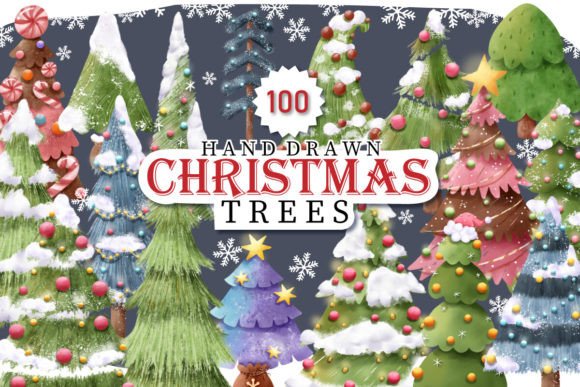
The sheer volume of options in this pack is its strongest selling point. Having one hundred distinct tree designs means you are unlikely to send the same finished product to two different clients. The mood ranges from whimsical and cartoonish to more traditional and structured silhouettes. For an Etsy seller or boutique owner, this variety allows for incredible brand consistency while still offering customization. You can match a specific tree style to a customer's personality, whether they want something modern and minimalist or dense and festive.
Visually, the shapes are clean, which is a good sign for digitizing potential. However, since these are provided as clip-arts, the responsibility falls on us to ensure the conversion to an embroidery file respects the original lines. Some of the intricate branches might look stunning in vector form but could become a muddy mess if the stitch density is too high on a small scale. The visual personality of these trees suggests they would work beautifully as focal points on larger items, but careful editing is required for tiny applications.
Real-World Application: The Holiday Tote Bag Project
To test the viability of these designs, I imagined a real-life scenario: preparing a run of custom tote bag design orders for a local market. I selected three distinct trees from the 100 Beautiful Christmas Trees Clip-arts collection to appliqué onto canvas totes. The goal was to create a set of reusable grocery bags that doubled as holiday gifts.
The process revealed important insights. The larger, fuller tree designs translated exceptionally well when used as an applique design. By cutting the fabric shapes based on the clip-art outlines and securing them with a tight satin stitch border, the texture of the fabric added a dimension that flat printing cannot achieve. Customers reacting to these bags in a mock-up setting responded positively to the tactile feel. It felt premium, like a genuine handmade product rather than mass-produced merchandise.
Conversely, trying to use the most detailed, spindly tree designs as a full fill stitch area on the same canvas proved challenging. The complexity got lost in the weave of the heavier fabric. This taught me that for textured materials, simpler shapes from the collection are superior. For smooth fabrics like those used in sweatshirt embroidery or baby embroidery, the finer details might shine brighter, provided the stabilizer is adequate.
Ideal Surfaces and Product Fit
Not every design in a large pack is suitable for every surface. Based on the visual weight of the trees in 100 Beautiful Christmas Trees Clip-arts, here is where they perform best:
- Custom Apparel: Medium-sized trees work perfectly on the left chest of hoodies or the back of custom apparel like t-shirts. They provide a festive touch without overwhelming the garment.
- Patches and Badges: The bolder, simpler silhouettes are ideal for creating an embroidered patch. These can be ironed onto jackets or hats later, adding versatility to your small shop product line.
- Home Decor: Larger, more ornate trees from the collection are excellent for pillow covers and tea towels. On kitchen linens, a running stitch outline combined with selective filling creates a charming, rustic look.
- Caps and Hats: This requires caution. Only the smallest, least detailed trees should be attempted on curved surfaces like caps. Even then, you must ensure the design fits within the standard cap hoop size without distortion.
Technical Considerations for Stitching Clarity
When moving from a digital Illustrations concept to a physical stitch-out, technical limitations become apparent. If you are digitizing these clip-arts yourself, pay close attention to the thread colors. A design that relies on subtle shading in a graphic format may require excessive color changes in embroidery, which can frustrate customers and increase production time. I recommend simplifying the color palette to three or four shades maximum for a professional look.
Stitch density is another critical factor. Dense areas can cause puckering, especially on stretchy fabrics or thin materials used for baby clothes. If a tree design from the pack has heavy foliage, consider using a lighter fill pattern or breaking it up with open spaces. Always test the design on scrap fabric that matches your final material. What looks crisp on a stiff denim swatch might sink into a soft fleece sweatshirt.
Furthermore, consider the background. A dark green tree might vanish on a black garment unless you introduce a contrasting outline or a lighter inner detail. Testing your digital embroidery file in black and white mockups before stitching can help you identify contrast issues early. This step is vital for maintaining brand consistency and ensuring every personalized gift looks intentional and high-quality.
Designer Notes for Commercial Success
For those looking to turn these designs into revenue, a few practical rules apply. First, never skip the test stitch. A failed commercial embroidery run due to poor tension or bad digitizing costs more in time and materials than a five-minute test on scrap fabric. Second, verify the licensing terms associated with 100 Beautiful Christmas Trees Clip-arts. While many clip-art packs allow for commercial use in finished goods, some restrict the sale of the digital files themselves. Ensure you are compliant before listing items on Etsy or your website.
Finally, think about the end-user experience. If you are selling a personalized product, consider how the item will be washed. Dense stitching holds up well, but poorly secured edges on an applique might fray after several cycles. Educating your customer on care instructions adds a layer of professionalism that builds customer trust.
In conclusion, 100 Beautiful Christmas Trees Clip-arts offers a robust foundation for holiday creativity. It is not just a collection of images; it is a toolkit for creative entrepreneurs willing to put in the technical work. Whether you are making a single personalized gift for a family member or stocking inventory for a winter craft fair, these designs have the potential to elevate your work. The key lies in selecting the right tree for the right fabric, respecting the limitations of the needle, and always prioritizing the quality of the finished product. With thoughtful application, this collection can help you create memorable, high-value items that stand out in a crowded marketplace.