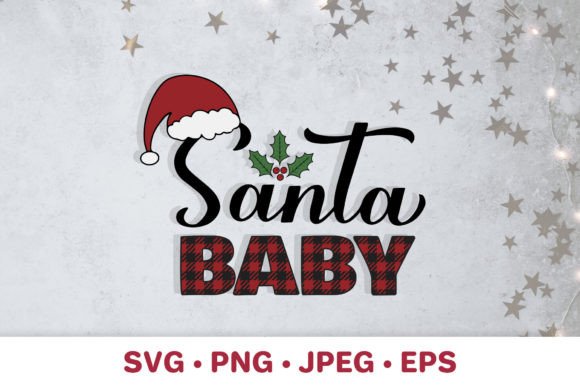
Baby Santa SVG: A Designer's Review for Holiday Embroidery
As we approach the peak holiday season, my design queue is overflowing with requests for festive custom apparel. Clients want everything from matching family sweatshirts to personalized nursery decor. Recently, I pulled the Baby Santa SVG. Christmas Shirt Design from my library of Illustrations to evaluate its potential for a real-world production run. My goal wasn't just to see if it looked cute on a screen, but to determine if it holds up under the needle when stitched onto actual fabric for paying customers.
The first impression of this design is undeniably charming. It captures that specific niche of "baby's first Christmas" without feeling overly cluttered. The visual personality is soft and inviting, which is exactly what you want for baby embroidery or boutique children's wear. However, as an experienced embroiderer, I know that a cute graphic doesn't always translate into a clean stitch-out. The layout suggests a balance between fill areas and detail work, which immediately made me think about thread tension and stabilizer choices before I even loaded the file.
Real-World Application: The Boutique Sweatshirt Test
To give this machine embroidery design a fair trial, I envisioned a specific project: a custom order for a local boutique needing a run of premium toddler hoodies. These aren't cheap big-box store blanks; they are heavy-weight, brushed fleece garments that customers expect to last for years. This is where the Baby Santa SVG. Christmas Shirt Design faces its first real test. Fleece is notorious for swallowing stitches if the density isn't right, and the texture can obscure fine details.
In this scenario, the design's shape and theme fit perfectly. It's centered, balanced, and scales well for the chest area of a small garment. If I were using this for a tote bag design or a pillow cover, the larger surface area would allow the details to breathe even more. But on a sweatshirt, every millimeter counts. The illustration style leans towards clean lines, which generally performs well as a satin stitch or a tight fill stitch, provided the underlay is sufficient to prevent the fabric grain from showing through.
Navigating Fabric Textures and Hoop Limitations
One of the critical factors in reviewing any digital embroidery file is understanding where it might fail. While the Baby Santa SVG. Christmas Shirt Design shines on stable cottons and poly-blends, caution is required when moving to tricky materials. If you are planning to stitch this onto a stretchy onesie or a thin knit fabric, you must be aggressive with your stabilizer strategy. A cut-away stabilizer is non-negotiable here to prevent the design from puckering after the first wash.
Furthermore, consider the hoop size. If you are adapting this for curved surfaces like caps or hats, the geometry of the design matters. Rounded elements usually digitize better on caps than sharp corners, which can suffer from registration issues on a curved plane. For this specific illustration, the organic shapes suggest it could work on a dad hat, but you would need to verify the stitch count and density. High-density areas on a cap can lead to stiffness that customers find uncomfortable.
Dark fabrics present another challenge. If you are stitching this onto a navy or black garment, the contrast becomes your best friend and your biggest risk. You need to ensure the thread colors selected pop against the background. Sometimes, a design that looks vibrant on a white mockup loses its definition on dark fabric if the digitizer didn't account for proper outlining or if the fill stitch isn't dense enough to cover the base material completely.
Commercial Viability and Brand Consistency
For Etsy sellers and small shop owners, the visual appeal of a finished product directly impacts buyer engagement. The Baby Santa SVG. Christmas Shirt Design has the kind of professional polish that builds customer trust. When a client receives a handmade product that looks crisp and well-executed, they are more likely to return or recommend your craft business to others. This design supports brand consistency because it avoids trendy gimmicks that date quickly; it feels like a classic holiday asset.
However, before listing this as a commercial embroidery option, you must do your due diligence regarding licensing. Just because a file is available as an illustration doesn't automatically grant unlimited commercial rights. Always check the specific terms attached to the download. Can you sell the physical embroidered item? Can you sell the digital file itself? Clarifying this protects your business from legal headaches down the road.
Practical Notes for the Working Embroiderer
If you decide to add this to your holiday lineup, here is my practical advice for ensuring the best results:
- Test on Scrap First: Never run a full batch without stitching a sample on the exact same fabric weight and type you intend to use for the final product.
- Check Stitch Density: Inspect the preview in your embroidery software. If the fill areas look too solid, consider reducing the density slightly to prevent needle perforation on delicate baby clothes.
- Thread Contrast: Experiment with thread colors. Sometimes a slight variation in shade can make the difference between a flat look and a dimensional one.
- Mockup Verification: Create black and white mockups to check for value contrast. If the design disappears in grayscale, it might lack definition when stitched.
- Detail Inspection: Zoom in on tiny lettering or small decorative accents. These are the first things to break down if the stitch length is too short or the turn commands are poor.
Ultimately, the Baby Santa SVG. Christmas Shirt Design is a strong contender for your seasonal catalog. It bridges the gap between whimsical illustration and functional embroidery art. Whether you are creating a personalized gift for a family member or producing inventory for a craft fair, this design offers the versatility needed for various applications, from aprons to blankets. Just remember that the quality of the finished product relies as much on your execution—your choice of stabilizer, thread, and fabric—as it does on the quality of the source file. Treat it with the care it deserves, and it will serve as a reliable asset in your creative entrepreneurship journey.