Review: Christmas Llama Watercolor Clipart for Embroidery
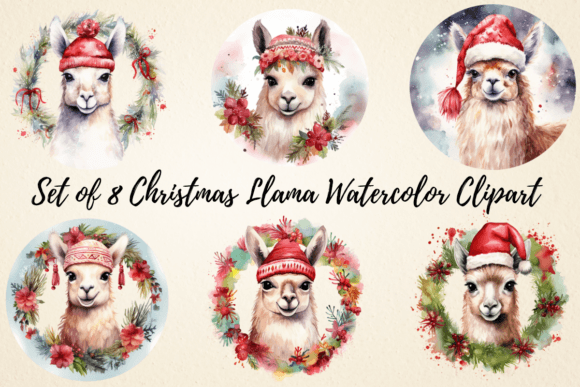
As a designer who spends more time staring at stitch previews than most people care to admit, I approach new assets with a mix of excitement and skepticism. When I first opened the Christmas Llama Watercolor Clipart, my initial reaction was purely visual. The soft, bleeding edges of the watercolor style create an immediate sense of whimsy and warmth that feels perfectly suited for the holiday season. However, translating a digital illustration into a tangible machine embroidery design requires a different kind of scrutiny. It is not just about how it looks on a screen; it is about how those fluid lines translate into thread, how the density sits on fabric, and whether the final finished product holds up to the wear and tear of real life.
Translating Soft Edges into Stitch
The primary challenge with any watercolor-style graphic is the lack of hard outlines. In the world of Illustrations, this gradient effect is achieved through opacity and blending. In embroidery, we achieve this through stitch density, color layering, and the strategic use of running stitch or light fill stitch areas. Upon reviewing the digitized version of the Christmas Llama Watercolor Clipart, I noticed the designer has done a commendable job mimicking that organic feel without creating a swamp of thread.
The layout avoids overly dense blocks that would make the fabric stiff, which is crucial for apparel. Instead, it relies on varied thread directions to suggest the flow of paint. For a project like a cozy sweatshirt embroidery piece, this approach is ideal. It allows the garment to retain its drape while still showcasing the festive llama motif. The color transitions are handled well, suggesting that a careful selection of thread colors—perhaps blending a soft sage with a deeper forest green for the holiday accents—will yield the best results.
Real-World Application: The Holiday Tote Scenario
To truly test the viability of this asset, I imagined a specific client request: a set of custom reusable tote bags for a boutique coffee shop's holiday promotion. The goal was to create a handmade product feel that elevates the brand without looking mass-produced. The Christmas Llama Watercolor Clipart fits this narrative perfectly. Its playful yet sophisticated vibe appeals to a broad demographic, from young parents to gift shoppers.
In this scenario, the design would be centered on a natural canvas tote bag design. Because canvas has a distinct fabric texture, the open areas of the watercolor style allow the material to breathe, preventing the dreaded "cardboard" effect where the embroidery becomes so stiff it stands up on its own. The llama's expression adds a touch of personality that encourages social sharing, a key metric for any Etsy seller or small business owner looking to boost engagement. If stitched correctly, this isn't just a bag; it becomes a personalized gift that customers actually want to carry around town.
Navigating Fabric and Hoop Constraints
While the design shines on medium-weight fabrics like cotton twill or fleece, caution is required when moving to trickier materials. If you are planning to use this on a stretchy knit for baby embroidery projects, such as a onesie or a nursery blanket, the stabilizer choice becomes critical. Watercolor effects often rely on subtle shifts in density; if the fabric shifts during stitching due to inadequate stabilization, those soft gradients can turn into jagged, uneven messes.
Furthermore, consider the hoop size. Detailed watercolor effects need space to resolve. Trying to shrink this design down for a small pocket on a cap or a tiny corner on a kitchen towel might lose the nuance of the original Illustrations. The fine details that give the watercolor look its charm could merge into a solid blob if the scale is too small. For curved surfaces like hats, ensure the digitizing accounts for the push and pull of the fabric, or stick to flat applications like patches or pillow covers where the design can lie completely flat.
Commercial Viability and Brand Consistency
For craft business owners, the consistency of the output is directly tied to customer trust. A design that looks muddy or poorly defined after stitching can damage a brand's reputation. The Christmas Llama Watercolor Clipart offers a high level of professionalism if executed with care. It avoids the clip-art trap of looking generic; instead, it feels like a custom commission. This perceived value allows makers to price their small shop product listings higher than standard, blocky embroidery designs.
When creating printable mockup files for online listings, this design photographs beautifully because the varying stitch heights catch the light differently, adding depth to product images. Whether you are selling custom apparel, holiday ornaments, or even digital previews of what a physical item could look like, the visual appeal is strong. It signals to the buyer that thought went into the creation process.
Practical Notes for the Studio
Before committing to a production run or promising a delivery date to a client, there are several steps I strongly recommend taking with this specific file:
- Test on Scrap Fabric: Always stitch a sample on the exact same material you intend to sell. The way the watercolor effect renders on felt versus flannel can vary significantly.
- Check Thread Contrast: Watercolor styles depend on subtle tonal shifts. Ensure your thread palette has enough variation to distinguish the layers without clashing.
- Review Stitch Density: Look closely at the darkest areas of the llama's fur or the holiday accessories. If they feel too heavy, consider adjusting the underlay or density settings in your software if you have editing capabilities.
- Verify Licensing: Since this is intended for potential commercial use, confirm the license terms attached to the digital embroidery file. Ensure you are cleared to sell finished items or if there are restrictions on volume.
- Mockup in Black and White: Sometimes, checking the design in grayscale helps identify areas where contrast might be lost, ensuring the shape remains recognizable even from a distance.
Ultimately, the Christmas Llama Watercolor Clipart is a versatile asset that bridges the gap between artistic illustration and functional commercial embroidery. It requires a respectful approach to materials and technique, but the payoff is a holiday embroidery piece that feels fresh, modern, and deeply charming. For the maker willing to pay attention to the details of fabric and tension, this design offers a fantastic opportunity to create standout products this season.